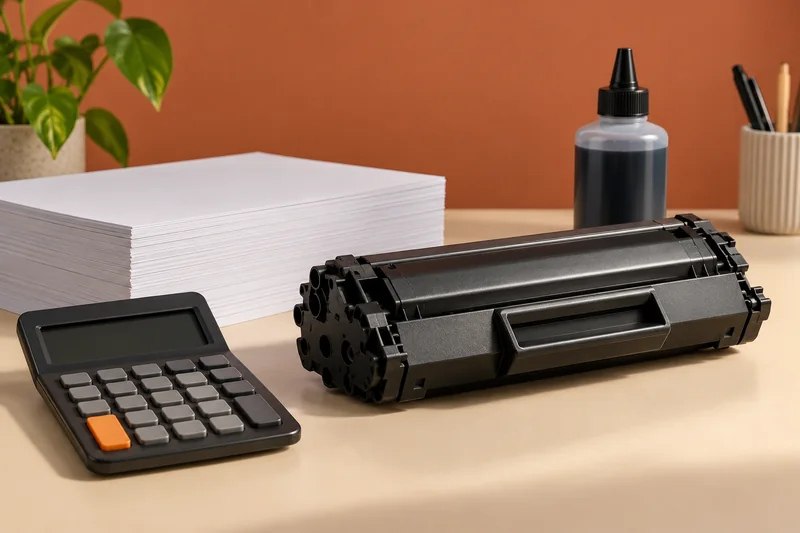
Short answer: Record the included starter toner separately from each replacement cartridge. Use the exact supply code, regional printer package and stated yield method. The largest replacement yield is not automatically what comes in the box.
On this page
Apply the guide to your own configuration
Starter toner belongs in the purchase-period budget separately from replacement toner. A replacement cartridge’s declared yield cannot retroactively establish the capacity of the cartridge supplied in the printer box.
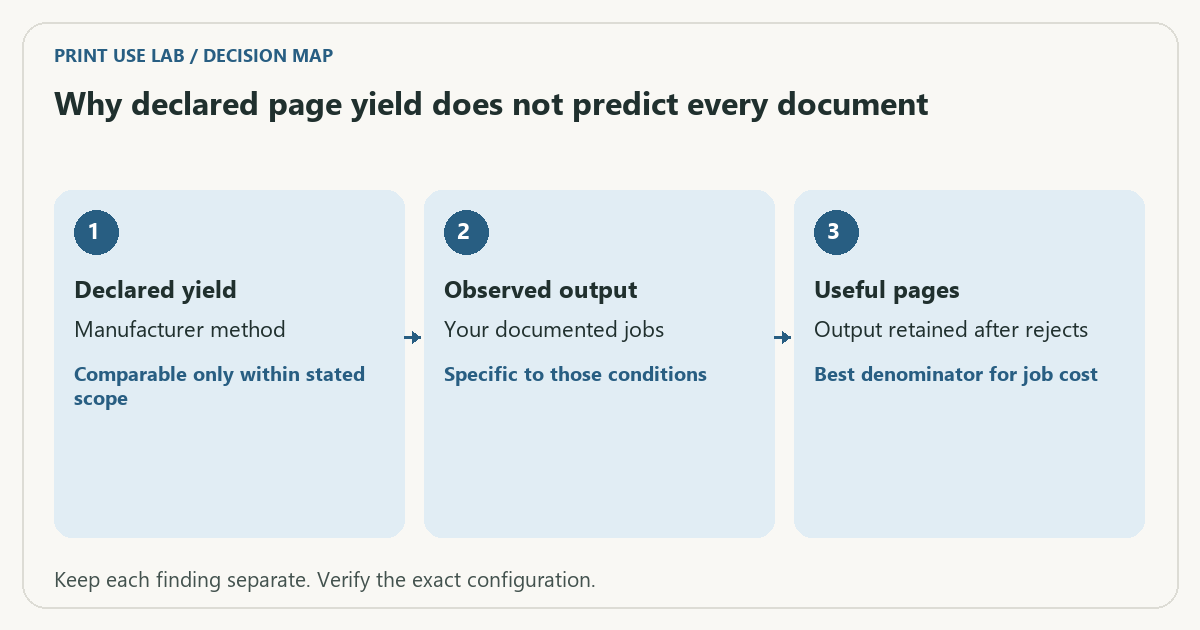
For a more specific worked case, read Why declared page yield does not predict every document. It includes an original diagram, a decision table and an editable record. Download its worksheet or open the print-job workbook.
Review note — October 21, 2026: Added this configuration check and the linked practical resource. Earlier documentary guidance remains below; no physical test has been added.
Research guide · Sources checked October 18, 2026. The procedures and examples below are planning aids, not results from a hands-on product test.
Make two supply records
One record belongs to the printer package: what is included, its stated yield and any setup conditions. The second belongs to the replacement you plan to buy: supply code, price date and declared yield. A product page can advertise an optional high-yield cartridge while the box contains a different starter. Do not copy the optional yield into your first-year estimate.
Brother’s US yield guidance lists different starter yields across several model groups and separates them from TN229 replacement variants. It also describes ISO/IEC 19798 test conditions and explains that actual yield depends on what is printed. This confirms the need for model-specific records; it does not predict how long a cartridge will last in your home.
Compare cost per printed side
| Input | Keep consistent |
|---|---|
| Supply price | Currency, tax treatment and the same purchase date |
| Yield | Matching cartridge code and declared test method |
| Unit | Printed sides, not sheets or print jobs |
| Color assumption | A complete color supply set where needed |
| Other consumables | Document separate drum or maintenance costs |
| Included supplies | Account once in the ownership estimate |
The simple supply calculation is replacement price divided by declared yield. It is a planning ratio, not a measured cost for your documents. Photo-heavy pages, coverage and workflow can change the real outcome. Keep paper and electricity separate unless you explicitly include them in both comparisons.
Work a first-year example
Hypothetical example, not a current product offer: a printer costs $180, includes toner rated for 700 printed sides, and the planned replacement costs $60 for 1,500 declared sides. You expect 1,200 sides in year one. The ongoing toner ratio is $60 ÷ 1,500 = $0.04 per side. It does not mean year-one cash spending is 1,200 × $0.04.
Under a deliberately simplified assumption that the included toner supplies the first 700 sides, the remaining 500 sides require buying a replacement. Cash outlay is then $240 before paper, tax and other costs, with part of the replacement left for later. Actual yield could differ. Show both cash purchases and allocated running cost rather than calling either one the single “true” number.
Handle color and low-use printers carefully
A color estimate should not divide a complete color-set price by the black-only yield. Record each required cartridge, its declared yield and which can limit the scenario. Check whether the printer also uses a separate drum or other replaceable component. These costs can matter even when toner looks inexpensive.
Use the cost per page calculator for transparent arithmetic and the monthly estimator to explore your own volume. For a purchase decision, read our full methodology and verify supplies with the compatibility guide. No calculator can turn a declared laboratory yield into guaranteed owner performance.
Sources and scope
- Brother US: toner yield not as expected — Starter and replacement examples and yield limitations for the listed models.
Continue with your next check
Build on what you just learned
Your next useful step.
Compare supplies, volume and rejected pages.
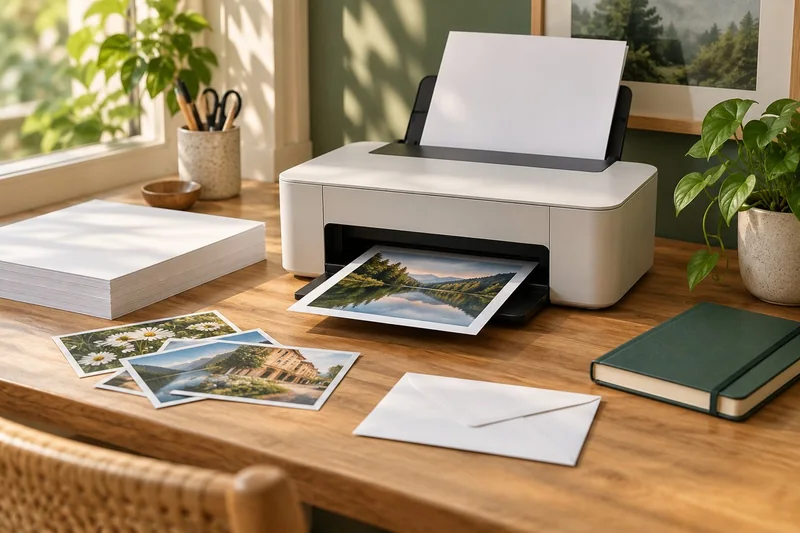
Epson EcoTank ET-2950: a sensible shortlist for regular mixed home printing
I would shortlist the ET-2950 for a household that prints colour documents regularly and wants automatic A4 duplex printing with refillable tanks.
Read the guide →Cost per page methodology: yields, color and ownership costs
Begin with the supplies price divided by the matching declared yield, then explain the scope. That quotient is a planning baseline, not a promise…
Read the guide →