Estimate your usable monthly work, then add explicitly assumed waste and a planning allowance. The output distinguishes printed sides from sheets. It does not predict printer life or assign a manufacturer duty cycle.
Formula and example
Usable sides = daily sides × printing days. Total output = usable sides ÷ (1 − unusable-output share). Sheets = total sides × (1 − duplex-side share ÷ 2), rounded up. Tray loads = ceiling(sheets ÷ tray capacity), including the initial fill. With 20 usable sides/day for 22 days, 5% waste and 50% of sides paired in duplex, the estimate is about 463 total sides and 348 sheets. A 100-sheet tray requires four modeled loads.
Planning is not a durability claim
The optional allowance adds your chosen margin to total output. A 20% allowance in the example gives 556 planning sides. Compare that scenario with a documented recommended monthly print volume. Do not treat a maximum duty cycle as a normal workload target.
The model assumes complete two-sided pairs for the duplex share and compatible media. Real jobs with odd page counts can use more sheets. Tray capacities often have a specified paper basis, and specialty media can have much lower loading limits. Use this tool to plan workload, then verify the actual input capacities and print modes.
Build on what you just learned
Your next useful step.
Compare supplies, volume and rejected pages.
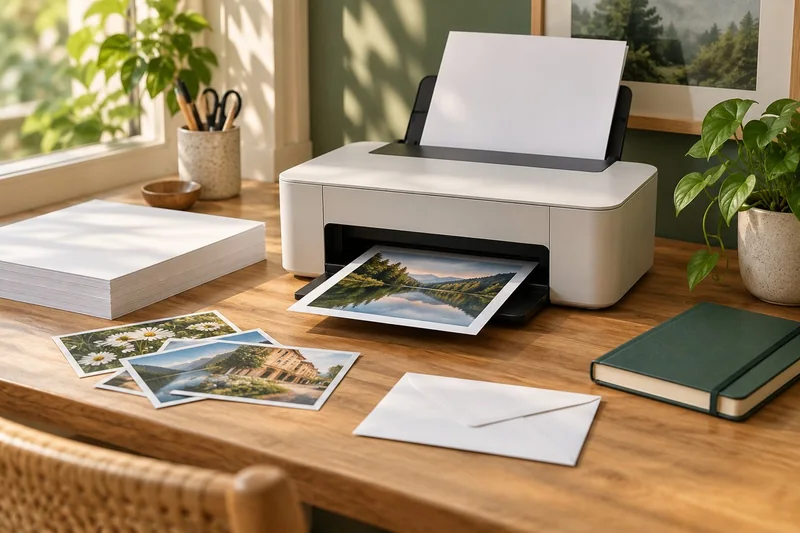
Epson EcoTank ET-2950: a sensible shortlist for regular mixed home printing
I would shortlist the ET-2950 for a household that prints colour documents regularly and wants automatic A4 duplex printing with refillable tanks.
Read the guide →
Cost per page methodology: yields, color and ownership costs
Begin with the supplies price divided by the matching declared yield, then explain the scope. That quotient is a planning baseline, not a promise…
Read the guide →